 DeepEats
How to pair Oura data with meal timing notes
Oura already tells a rich overnight story. Meal timing notes give that story a second column. Pair them calmly — and resist turning one score into a food verdict.
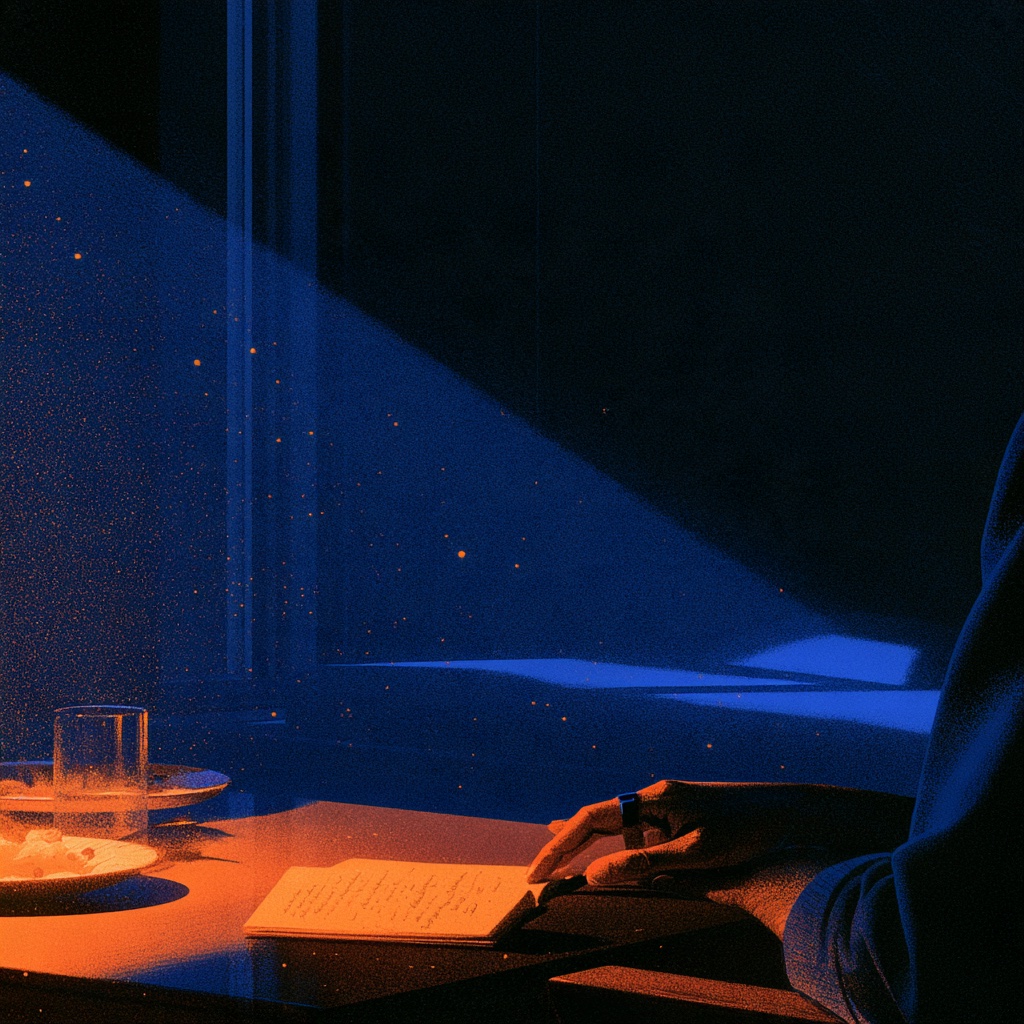
Two columns, one night — not a verdict
Wearable sleep data without meal context is incomplete. Meal notes without sleep context are just a diary. The useful habit is side-by-side:
- Left: what you ate and when (simple tags).
- Right: what the night looked like (Oura context + how it felt).
That pairing does not prove dinner “caused” a dip in readiness. Stress, training, alcohol, travel, illness, and a hard day all move the same dials. The point is to make meal timing visible next to the signals you already check — so patterns can whisper after a week, not after one dramatic morning.
DeepEats is built for that two-column habit. This article shows the method even if you start with Notes + the Oura app.
“Pair for context. Cluster for signal. One night for humility.”
Trademark care: Oura is a trademark of Oura Health Oy. DeepEats is not affiliated with, endorsed by, or sponsored by Oura Health Oy.
What to put in the meal column
Keep the left column short enough that you will actually do it. You are not building a calorie spreadsheet.
Minimum useful tags:
- Last substantial meal time (clock).
- Timing label — usual / late / very late (relative to your typical sleep onset).
- Load tag — soft-landing / usual / heavy.
- Alcohol — none / drinks + rough timing.
- Late caffeine — yes/no after your cutoff.
- One-line body feel at lights-out (settled, stuffed, hungry, spicy warmth).
Optional: photo of the plate, restaurant vs home, travel day flag.
That is enough to sort nights later. For the composition angle when dinner runs late, see What to eat when dinner has to be late. For the broader pattern map, see Which meal patterns support better sleep.
What to glance at in the Oura column
Stay descriptive. You are collecting context, not writing a lab report.
Helpful next-morning glances (names vary by Oura views and over time):
| Glance | Why it pairs with meals |
|---|---|
| Sleep onset / bedtime | Lets you compute a rough digestion gap from last meal → sleep |
| Latency | Longer time-to-sleep can sit next to a heavy late plate — or stress |
| Overnight resting heart rate | Sometimes settles later after a large late meal or drinks |
| HRV / readiness-related trends | Morning trends are noisy; useful in clusters, not as a one-night verdict |
| Efficiency / restlessness | First-half restlessness sometimes stacks with meal load + alcohol |
| Your one-line feel | Still the cheapest “sensor” you own |
Do not overfit. A single lower readiness score after a soft-landing late dinner is not proof the meal failed. Park it in the cluster and keep logging.
Related timing background: How dinner timing affects your sleep.
Fig. 1 — Side-by-side pairing
One evening beside one night.
- Last meal
- 9:40 PM
- Portion
- Light
- Alcohol
- None
- Late caffeine
- None
- How it felt
- Settled, not stuffed
- Sleep onset
- 11:28 PM
- Dinner-to-sleep gap
- 1 h 48 min
- Resting heart rate
- Near recent usual
- HRV
- Near recent usual
- Interpretation
- One observation to keep
Illustrative composite. Pair the evening with the night; compare patterns over time.
| Meal notes (example) | Oura context (example) |
|---|---|
| Last meal 9:40 PM · Late | Sleep onset ~11:28 PM |
| Soft-landing load | Digestion gap ~1.8 h (short) |
| No alcohol · no late caffeine | RHR near baseline by mid-night |
| Settled, not stuffed | Latency a bit longer · park for cluster |
Rules that keep you from overinterpreting
- One night is noise. Travel, arguments, illness, and hard workouts spoof meal stories.
- Change one thing when you trial. If you move dinner earlier and drop the nightcap and cut caffeine, you will not know which lever mattered.
- Compare like with like. Late + soft vs late + heavy. Usual window with vs without alcohol.
- Write the meal tags the same night. Morning memory edits the story.
- Readiness is not a report card on dinner. It is a blended signal. Use it as one column, not a judge.
- Respect clinical care. Wearable trends are not a diagnosis. See a clinician for sleep disorders or concerning symptoms.
“Oura shows the night. Meal tags show the evening. Patterns need both — and time.”
A simple weekly pairing loop
A lightweight loop that stays product-adjacent without requiring perfection:
Days 1–2 — Baseline Eat as you usually do. Log last meal time + load + drinks. Glance at Oura the next morning; jot digestion gap and one feel word.
Days 3–5 — One gentle contrast Pick one change you can live with: earlier last bite on two nights, or soft-landing when late, or no nightcap on late nights. Keep tags consistent.
Days 6–7 — Review clusters Sort: usual vs late; soft vs heavy; drinks vs none. Look for whispers, not miracles. Then decide whether a longer seven-day meal–sleep trial (planned) is worth it.
Logging companion (planned): Meal logging for sleep. Pattern companion: Which meal patterns support better sleep.
How DeepEats helps
Log meals, snacks, and drinks on iPhone, then connect Oura to place your evening beside the night that followed.
- Confirm the meal time, relative portion (Light, Normal, or Heavy), and relevant tags such as caffeine, alcohol, spicy, or sweet. Dinner timing is calculated from sleep onset.
- See resting heart rate, HRV, time to fall asleep, sleep efficiency, and total sleep beside your recent usual.
- Compare eligible nights with and without a habit. DeepEats shows night counts and typical values; it can also report no clear difference or not enough nights to compare.
- Try one small change for seven nights. The result compares nights that followed your plan with your recent eligible nights.
Calorie and macro estimates do not affect patterns. DeepEats does not grade meals or prove that a food caused a change in sleep. There is no promised date for a finding: comparable nights and a consistent difference matter more than days elapsed.
iPhone beta · Oura ring and membership required · Free during beta · Your data is never sold.
FAQ
How do I pair Oura data with meal timing?
Log last meal time, load, alcohol, and late caffeine the same evening. Next morning, note sleep onset (for digestion gap), plus a quick glance at RHR/HRV/latency/feel. Review clusters after several similar nights — not one score in isolation.
Can Oura tell me the best time to eat dinner?
Not by itself. Oura reflects overnight physiology; meal tags supply the evening story. Together they help you find personal contrasts. There is no universal “Oura dinner time.”
Which Oura metrics matter most after a late meal?
Often: sleep onset (for gap), overnight resting heart rate settling, latency, and how rested you feel. Treat HRV/readiness as trend context across nights, not a one-meal verdict.
Do I need to log every bite?
No. Last substantial meal + simple tags beat a abandoned perfect diary. See meal logging for sleep (planned).
Is DeepEats affiliated with Oura?
No. DeepEats integrates with Oura data (with your permission) as an independent app. Oura is a trademark of Oura Health Oy. DeepEats is not affiliated with, endorsed by, or sponsored by Oura Health Oy.
Is this medical advice?
No. DeepEats Journal is general education. It is not a substitute for care from a clinician. Wearable data does not diagnose conditions.
Sources and further reading
The DeepEats team